
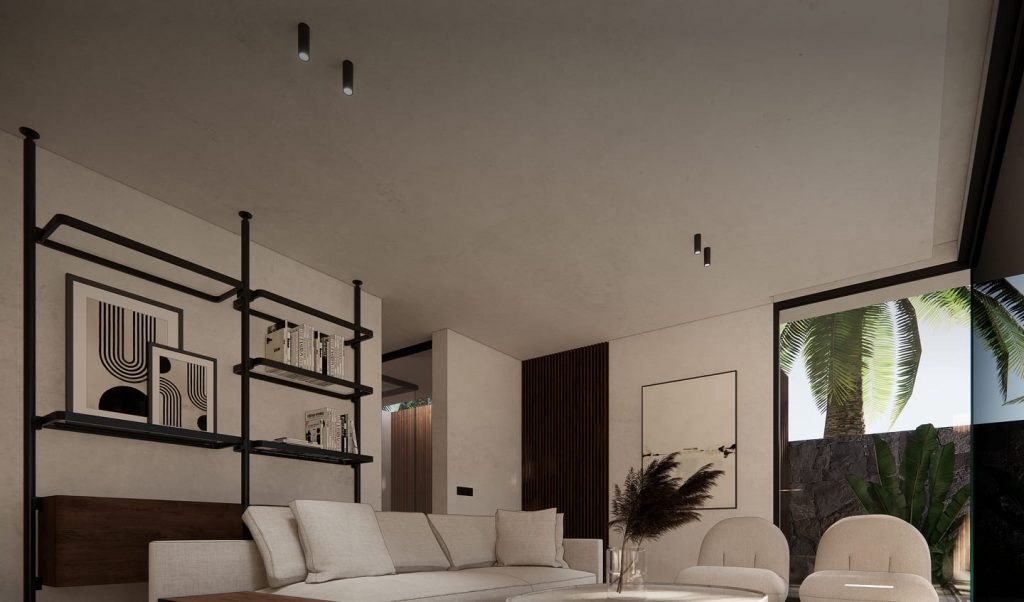
Luxury finishes can create an immediate impression, but they do not, on their own, define a truly premium villa. The difference lies deeper: in the stone that moderates heat, the timber that ages with character, the glass that protects silence, and the construction logic that remains valuable long after trends have passed. At Ávalos, we have spent years studying how architecture, landscape, and guest experience meet in the Canary Islands, and this article explains how to recognise substance beneath surface polish.
The distinction begins beneath the visible surface
A home may display polished porcelain, designer taps, dramatic lighting, and fashionable textures, yet still rely on a standard envelope, ordinary partitions, or basic insulation. These are luxury finishes: valuable, often beautiful, but essentially visible layers. They can be replaced, restyled, or upgraded without altering the deeper quality of the property.
By contrast, noble materials belong to the identity of the building itself. Volcanic stone, certified hardwoods, lime mortars, structural glass, and high-performance metals do more than decorate; they influence thermal comfort, acoustic calm, durability, and the way a villa belongs to its setting. In a place such as La Gomera and Bahía de Ávalos, material choice is not merely aesthetic — it is a dialogue with light, salt air, topography, and Atlantic views.
Why noble materials age differently from luxury finishes
The most persuasive materials in premium villas are not necessarily the most ostentatious. Natural stone develops patina rather than looking worn. Lime-based mortars breathe, soften light, and help interiors feel calmer. Certified timber brings warmth and tactile depth, whilst structural glass can open a villa to the horizon without compromising safety, shade, or insulation when properly specified.
This is where the distinction becomes practical. A fashionable finish may impress at first viewing, but a noble material performs every day. It helps regulate temperature, reduces maintenance cycles, and creates a sense of permanence. This is closely aligned with Ávalos’ sustainable architectural philosophy, where quiet luxury is measured less by display and more by comfort, proportion, authenticity, and long-term resilience.
What to look for when assessing a premium villa
For buyers, investors, and design-conscious owners, the question is not simply whether a villa looks refined. The more useful question is whether its refinement is structural, technical, and experiential. The best premium villas reveal their quality through details that are sometimes discreet but always consequential.
- Material honesty: Natural stone, mineral renders, timber, and glass should be used for their performance and origin, not only as decorative references.
- Envelope quality: Walls, roofs, glazing, and shading systems should support energy efficiency, acoustic comfort, and year-round ease.
- Contextual design: The villa should respond to orientation, views, privacy, prevailing winds, and the colours of the Canary Islands landscape.
- Operational intelligence: A premium property should be easy to maintain, manage, and enjoy, especially where ownership includes hospitality use.
Amenities matter, but only when they support the architecture
When people ask what features define a premium villa compared to standard luxury homes, amenities are often the first answer: a private pool, generous terrace, wellness areas, smart systems, security, concierge services, and professional guest management. These are important, but they work best when they are integrated into the architecture from the beginning, rather than added as afterthoughts.
In the Ávalos context, villa ownership is also connected to a wider resort experience: wellbeing, access to the coast, managed hospitality, and a clear villa acquisition and ownership model. The top amenities included in premium villas should therefore support daily pleasure, asset performance, and effortless use. A heated private pool, shaded outdoor living, reliable connectivity, discreet security, and professional maintenance all become part of the same promise: a villa that feels serene because it is technically well resolved.
The future of premium villas is quieter, more durable, and more contextual
The most convincing villas today are moving away from excessive spectacle. They favour architectural coherence, tactile depth, measured proportions, and sustainability that can be recognised in actual materials and systems. In coastal and island destinations, this means designing for sun, salt, breeze, privacy, and water use with the same care given to furniture or lighting.
That is why noble materials and luxury finishes should not be seen as rivals. A well-chosen finish can complete a space beautifully, but it should rest upon a stronger foundation. A premium villa is ultimately distinguished by what remains valuable when fashion changes: its relationship with place, the integrity of its construction, the intelligence of its systems, and the grace with which it will age.
If a villa conceived as both a private retreat and a long-term asset — with substance beyond surface presentation — resonates with you, we would be glad to share how the Ávalos investment structure brings architecture, lifestyle, and managed ownership together.
Frequently asked questions about noble materials vs. luxury finishes in premium villas
What features define a premium villa compared to standard luxury homes?
A premium villa is defined by construction depth, contextual architecture, high-performance systems, privacy, and durable materials. Standard luxury homes may rely more heavily on visible finishes without the same technical or environmental substance.
What are the top amenities included in premium villas?
The strongest premium villas often include a private pool, outdoor living areas, smart climate and security systems, wellness spaces, professional maintenance, and concierge-style services. These amenities should feel integrated, not decorative.
Are luxury finishes still important in a premium villa?
Yes, but they should complement noble materials rather than disguise ordinary construction. The finest finishes enhance proportion, light, touch, and atmosphere without becoming the sole expression of value.
Why are noble materials especially relevant in the Canary Islands?
Materials such as volcanic stone, timber, lime mortars, and structural glass suit the climate, landscape, and architectural character of the Canary Islands. They support comfort, authenticity, and long-term resilience.